Idioms About Life: Meaning, Examples, and Easy Explanations
What Are Idioms About Life? Life is a mix of positive experiences and challenging situations. Sometimes it is happy, and sometimes it is hard. Because life…
Open lessonUnlock the Power of Perfect Grammar
What Are Idioms About Life? Life is a mix of positive experiences and challenging situations. Sometimes it is happy, and sometimes it is hard. Because life…
Open lesson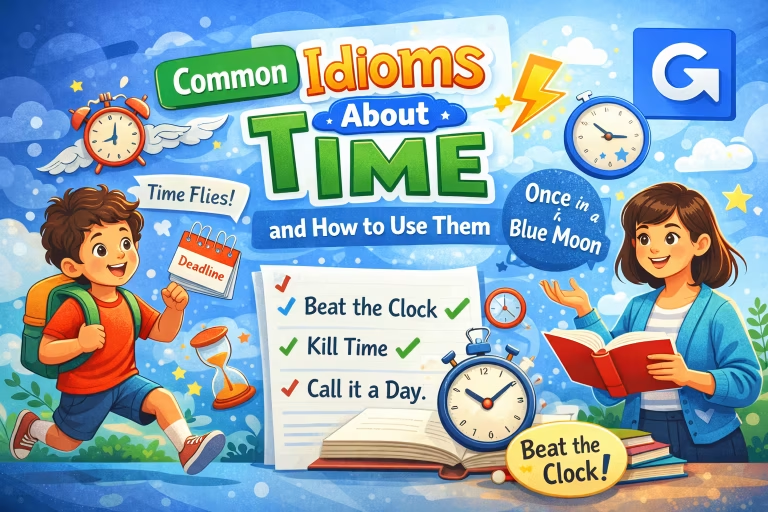
What Are Idioms About Time? Every day, our lives move with time. We talk about time when we wake up, go to school, finish homework, play…
Open lesson
Introduction: Why Does This Confuse Learners? Have you ever stopped while writing and wondered… Is it Grammer or Grammar?Which one is correct? This tiny spelling difference…
Open lesson
Words like okay and ok seem tiny, but they appear everywhere in texting, school writing, conversations, workplace emails, and even when we talk to ourselves. Many…
Open lesson
Introduction Have you ever typed alright and then wondered, “Wait… should it be all right?”Don’t worry — many English learners (and even native speakers!) get confused…
Open lesson
English proverbs are short, well-known common sayings that give advice or state a general truth. They are often based on old English historical events, customs, and…
Open lesson
If you’ve ever been confused about whether to use “to” or “too,” you’re not alone! These two little words cause trouble for many English learners and…
Open lesson
Introduction Have you ever typed or written the word alot and wondered why your English teacher or spellcheck marks it wrong every time? Or maybe you’ve…
Open lesson
Let’s face it: English is full of tricky word twins, but few mix-ups are as common or as cringe-worthy as lose vs. loose. Sure, they look…
Open lesson
In everyday English, small words can make a big difference. Two of the most commonly used little words are FOR and OF. They may look short…
Open lesson