Introduction
Every day, we ask questions, make requests, talk about skills, and imagine possibilities. While doing all this, two small but powerful words appear again and again: can and could.
For example:
- Can I go outside?
- Could you help me, please?
They look similar, and they are related. However, they do not mean the same thing. Many learners feel confused about when to use can and when to use could. As a result, mistakes happen in speaking, writing, exams, and even professional emails.
Therefore, this lesson will clear all confusion slowly, simply, and clearly.
By the end, you will:
- Understand the real difference between can and could
- Use both words correctly in real life
- Speak more politely and confidently
Definition Section
Let’s start with very easy definitions.
What Does Can Mean?
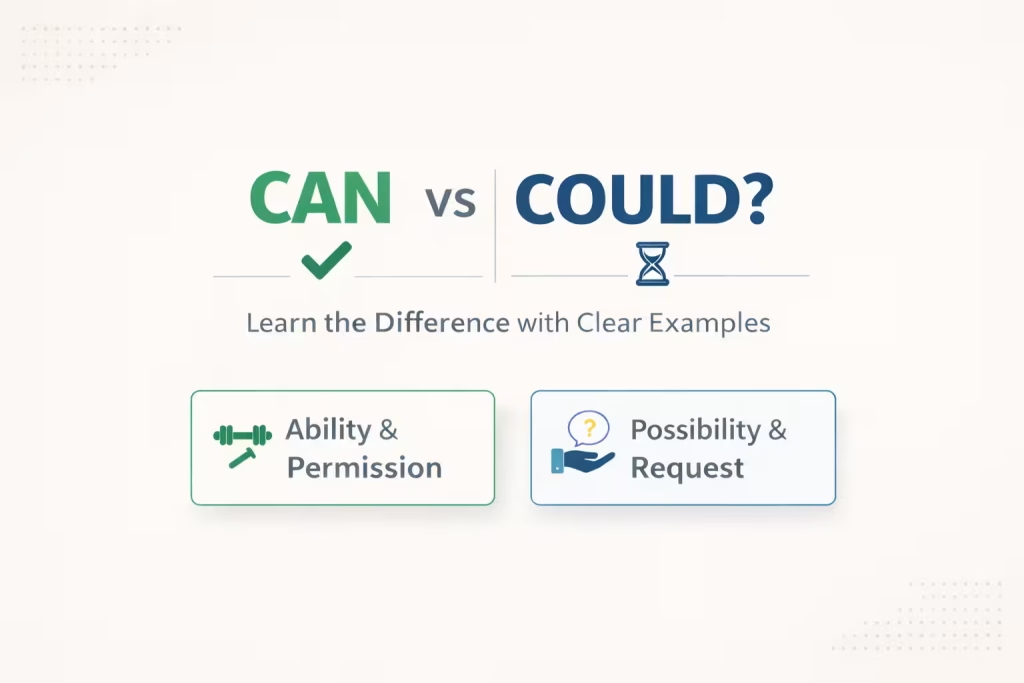
Can is used to talk about:
- Ability (what someone is able to do)
- Permission (asking or giving permission)
- Possibility (something that is likely or real)
Think of can as strong, direct, and present.
Examples:
- I can swim.
- You can sit here.
- It can rain today.
What Does Could Mean?
Could is used to talk about:
- Past ability
- Polite requests
- Less certain possibilities
- Imaginary or future situations
Think of could as softer, more polite, or less sure.
Examples:
- I could swim when I was five.
- Could you help me, please?
- It could rain later.
Step-by-Step Breakdown
Now, let’s understand this clearly one idea at a time.
Step 1: Ability (What You Are Able to Do)
Use CAN for Present Ability
- I can read English.
- She can cook well.
This means the ability exists now.
Use COULD for Past Ability
- I could run fast when I was young.
- He could climb trees as a child.
This means the ability existed before, not necessarily now.
Step 2: Permission (Asking or Giving Permission)
CAN = Direct / Informal Permission
- Can I use your pen?
- You can leave early today.
Used mostly with friends, family, or casual talk.
COULD = Polite / Formal Permission
- Could I use your pen, please?
- Could we enter the room?
Used in:
- Classrooms
- Offices
- With elders or strangers
Could sounds more respectful.
Step 3: Requests (Asking Someone to Do Something)
- Can you help me? → Friendly
- Could you help me? → Polite & respectful
Both are correct, but could is softer.
Step 4: Possibility (Chance of Something Happening)
CAN = Real, strong possibility
- This road can be dangerous.
- Too much sugar can harm health.
COULD = Less certain or future possibility
- It could rain tonight.
- He could be late.
Could means “maybe, not sure.”
Examples Table (20+ Clear Examples)
| Situation | Sentence |
|---|---|
| Ability (now) | I can drive a car. |
| Ability (past) | I could drive at 18. |
| Skill | She can speak English. |
| Old skill | She could sing well as a child. |
| Permission | Can I sit here? |
| Polite permission | Could I sit here, please? |
| Request | Can you open the door? |
| Polite request | Could you open the door? |
| Possibility | It can get very hot here. |
| Future chance | It could snow tonight. |
| Offer | I can help you. |
| Polite offer | I could help if you want. |
| Advice | You can try again. |
| Suggestion | You could try a new way. |
| Rule | Students can use books. |
| Formal rule | Students could submit later (special case). |
| Health | Smoking can cause illness. |
| Guess | He could be at home. |
| Ability | Birds can fly. |
| Past story | Birds could not fly in the story. |
Rules + Patterns (Easy to Remember)
Grammar Rules
- Can → present, strong, direct
- Could → past, polite, unsure
Sentence Patterns
- Subject + can + base verb
- I can read.
- Subject + could + base verb
- I could read before.
Politeness Tip
More polite = could
More direct = can
Why It Matters: Real-Life Usage
Using can and could correctly helps you:
- Sound polite in conversations
- Write better emails
- Score higher in exams
- Speak confidently with teachers and bosses
Even a small word choice can change how people feel about your English.
Common Mistakes (And Fixes)
Mistake 1: Using can in formal situations
Fix: Use could for politeness
Mistake 2: Using could for present ability
Fix: Use can for abilities now
Mistake 3: Thinking both mean the same
Fix: Remember: can = strong, could = soft
Exercises Section (Practice Time)
A) Fill in the Blanks
- I ___ swim very well.
- ___ you help me, please?
- She ___ read when she was four.
- It ___ rain later today.
- We ___ play outside now.
B) Choose the Correct Word
- (Can / Could) I borrow your book?
- I (can / could) run fast when I was young.
- It (can / could) be dangerous at night.
- (Can / Could) you please close the window?
- Birds (can / could) fly.
C) Make Your Own Sentences
- One sentence using can (ability)
- One sentence using could (past)
- One polite request using could
- One possibility sentence using could
- One permission sentence using can
D) Correct or Incorrect
- I can swim when I was five.
- Could you help me, please?
- She could read now.
- It can rain tomorrow.
- Can I come in?
Answer Key
- can
- Could
- could
- could
- can
- Can / Could (both correct, could is politer)
- could
- can
- Could
- can
- ❌ Incorrect
- ✅ Correct
- ❌ Incorrect
- ✅ Correct
- ✅ Correct
Mini Quiz (Quick Check)
Choose the right answer
- Polite request?
A) Can
B) Could ✅ - Present ability?
A) Can ✅
B) Could - Past ability?
A) Can
B) Could ✅ - Strong possibility?
A) Can ✅
B) Could - Soft suggestion?
A) Can
B) Could ✅
True / False
- Could is more polite than can. ✅
- Can is used for the past. ❌
- Could shows uncertainty. ✅
- Can is direct. ✅
- Both are modal verbs. ✅
Creative Activity: Story Builder for Kids
Write a short story using can and could at least 5 times.
Starter Idea:
“Ali can run very fast. When he was younger, he could run even faster…”
Let imagination grow with grammar
Short Summary of Learning
Can = ability now, permission, strong possibility
Could = past ability, polite requests, weak possibility
Both are correct—but used differently
Choosing the right one makes your English better
Leave a Reply