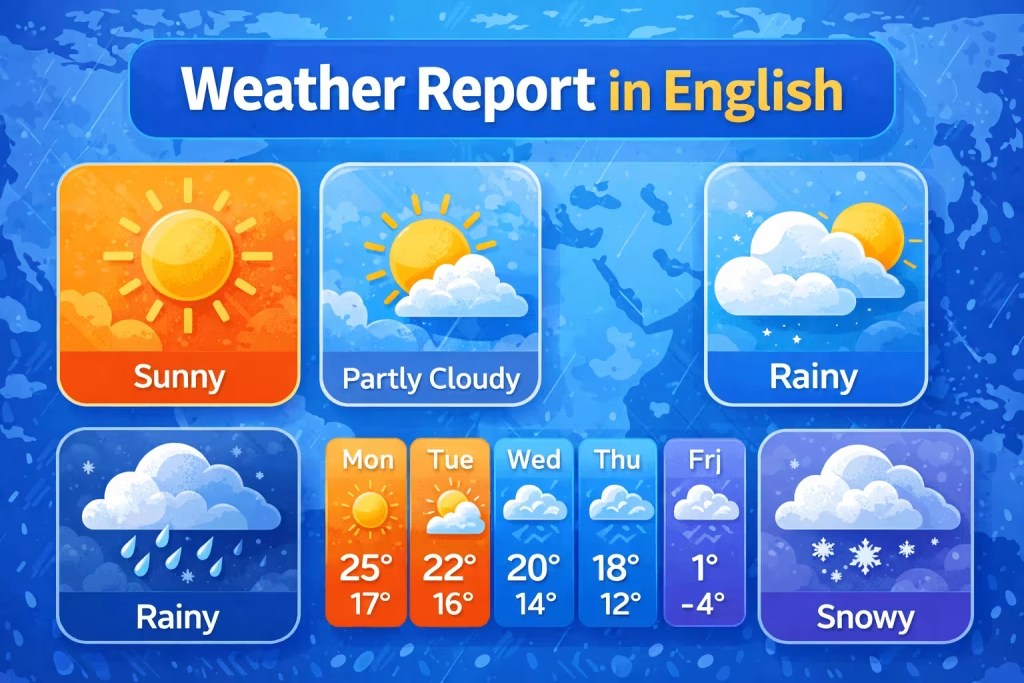
Introduction: Why Weather Talk Matters
Have you ever wondered why people love talking about the weather? Actually, weather conversations are everywhere! From the moment you wake up and check if it’s sunny outside, to planning your weekend activities, weather talk is a super important part of daily life.
Moreover, talking about weather is often the first thing people discuss when they meet. In fact, it’s one of the easiest ways to start a friendly conversation with anyone, your neighbor, classmate, or even someone new at the bus stop. Furthermore, weather reports help us decide what to wear, whether to carry an umbrella, or if we should plan that picnic we’ve been dreaming about!
What Is a Weather Report?
A weather report is like a story about what the sky and air are doing today, tomorrow, or any other day.
Additionally, it’s a special announcement that explains whether the day will be hot or cold, wet or dry, windy or calm, sunny or cloudy.
Breaking Down Weather Reports Step-by-Step
Step 1: Temperature Talk
First of all, every weather report starts with temperature, how hot or cold it is. We measure this in degrees (°C or °F). For example, “It’s 25 degrees today” means it’s quite warm!
Step 2: Sky Conditions
Next, we describe what the sky looks like. Is it clear and blue? Are there fluffy white clouds? Or maybe dark storm clouds? Subsequently, this helps people understand what kind of day to expect.
Step 3: Precipitation (Rain, Snow, etc.)
Then, we talk about whether water will fall from the sky. This could be rain, snow, sleet, or hail. Therefore, people know if they need umbrellas or snow boots.
Step 4: Wind Information
After that, we mention how fast the air is moving. Is it a gentle breeze or strong winds? Consequently, this helps people prepare for outdoor activities.
Step 5: Special Weather Events
Finally, we warn about any unusual weather like storms, fog, or extreme temperatures. As a result, everyone stays safe and prepared.
Examples Table: 20+ Weather Report Phrases
| Weather Type | Example Phrases | When to Use |
|---|---|---|
| Sunny | “It’s a beautiful sunny day!” | Clear skies, bright sun |
| Cloudy | “The sky is partly cloudy today.” | Some clouds visible |
| Rainy | “We’re expecting light rain this afternoon.” | Water falling from sky |
| Snowy | “Heavy snow is falling right now.” | White frozen precipitation |
| Windy | “Strong winds are blowing from the north.” | Air moving fast |
| Hot | “It’s extremely hot – 35 degrees!” | Very high temperature |
| Cold | “Bundle up! It’s freezing cold outside.” | Very low temperature |
| Mild | “The weather is mild and pleasant.” | Comfortable temperature |
| Foggy | “Thick fog is reducing visibility.” | Can’t see far |
| Stormy | “A thunderstorm is approaching.” | Lightning and thunder |
| Humid | “It’s very humid and sticky today.” | Lots of moisture in air |
| Dry | “The air is dry with no rain expected.” | No moisture |
| Overcast | “The sky is completely overcast.” | All gray clouds |
| Drizzling | “Light drizzle is falling now.” | Very light rain |
| Icy | “Roads are icy – be careful!” | Frozen water on surfaces |
| Breezy | “A gentle breeze is blowing.” | Light wind |
| Chilly | “It’s a bit chilly this morning.” | Slightly cold |
| Warm | “Tomorrow will be warm and sunny.” | Comfortably hot |
| Clear | “We have clear skies tonight.” | No clouds |
| Hailing | “Small hail is falling with the rain.” | Ice balls from sky |
Rules + Patterns: Weather Report Grammar
Essential Sentence Patterns:
• Present Continuous for NOW: “It is raining.” / “The sun is shining.” • Future with WILL: “It will be sunny tomorrow.” / “Rain will start at 3 PM.” • Going to for PREDICTIONS: “It’s going to snow tonight.” / “The storm is going to pass quickly.” • Present Simple for FACTS: “Winter days are cold.” / “It rains a lot in April.”
Temperature Patterns:
• It’s + adjective: “It’s hot.” / “It’s freezing.” • It’s + number + degrees: “It’s 20 degrees Celsius.” • The temperature is: “The temperature is rising/falling.”
Time Expressions:
• Today/Tomorrow: “Today will be cloudy.” • This morning/afternoon/evening: “This evening will be cooler.” • Later/Soon: “Rain will arrive later.” • By + time: “By noon, it will be warmer.”
Why It Matters: Real Life Usage
Learning weather vocabulary is incredibly practical! Here’s why:
First and foremost, you’ll use it every single day when checking weather apps or watching news. Additionally, it helps you make plans – should you go to the beach or stay inside? Furthermore, weather talk is perfect for starting conversations with anyone, anywhere in the world.
Moreover, understanding weather reports keeps you safe during extreme conditions. Also, if you travel, you’ll need to ask about weather in different places. Most importantly, weather vocabulary appears in books, movies, songs, and everyday conversations constantly!
Exercises Section
A. Fill in the Blanks (10 questions)
- It _____ raining heavily outside. (is/are)
- Tomorrow _____ be sunny and warm. (will/is)
- The temperature _____ 15 degrees Celsius. (is/are)
- Look at those dark _____! A storm is coming. (clouds/cloud)
- You should take an _____ because it might rain. (umbrella/umbrellas)
- The weather forecast says it _____ snow tonight. (will/is)
- It’s very _____ today – wear sunscreen! (sunny/sun)
- The wind is _____ from the east. (blowing/blow)
- Yesterday _____ colder than today. (was/is)
- In summer, the days _____ longer. (are/is)
B. Choose the Correct Word (5 questions)
- The weather is (pleasant/please) today.
- It’s (freeze/freezing) cold outside!
- We expect (heavy/heavily) rain later.
- The sky is (part/partly) cloudy.
- Tomorrow will be (most/mostly) sunny.
C. Make Your Own Sentences (5 prompts)
- Write a sentence about today’s weather using “It is…”
- Predict tomorrow’s weather using “will”
- Describe your favorite weather using adjectives
- Write about winter weather in your area
- Create a weather warning using “Be careful…”
Answer Key for All Exercises
A. Fill in the Blanks:
- is
- will
- is
- clouds
- umbrella
- will
- sunny
- blowing
- was
- are
B. Choose the Correct Word: 11. pleasant 12. freezing 13. heavy 14. partly 15. mostly
C. Make Your Own Sentences (Sample Answers): 16. It is cloudy and cool today. 17. Tomorrow will be warmer than today. 18. My favorite weather is warm and breezy. 19. Winter brings heavy snow to our town. 20. Be careful – the roads are icy!
Mini Quiz: Test Your Weather Knowledge!
- True or False: We say “It’s raining” not “It rains” for current weather.
- Multiple Choice: What’s the correct way to describe temperature? a) It has 20 degrees b) It’s 20 degrees c) It are 20 degrees
- True or False: “Sunny” is a noun.
- Multiple Choice: Which sentence is correct? a) Tomorrow is rain b) Tomorrow will rain c) Tomorrow will be rainy
- True or False: We use “it” as the subject in weather sentences.
- Multiple Choice: What does “humid” mean? a) Very cold b) Lots of moisture in the air c) Very windy
- True or False: “Drizzle” means heavy rain.
- Multiple Choice: Complete: “The weather forecast _____ snow tomorrow.” a) says b) tells c) predicts
- True or False: “Overcast” means completely cloudy.
- Multiple Choice: Which is a correct weather warning? a) Careful! It’s icy! b) Be careful! It’s icy! c) Being careful! It’s icy!
Quiz Answers:
- True 2. b 3. False (it’s an adjective) 4. c 5. True 6. b 7. False 8. c 9. True 10. b
Short Summary of Learning
Congratulations! You’ve mastered weather reports in English! Now you can confidently describe any weather condition, understand forecasts, and start conversations about the weather anywhere you go. Remember these key points:
- Always use “it” as the subject for weather
- Use present continuous for current weather
- Use “will” or “going to” for future weather
- Practice weather adjectives daily
- Weather talk is perfect for starting friendly conversations!
Leave a Reply